 Spotify
 iVoox
iVoox Amazon
Each year, the Pritzker Architecture Prize signals more than individual achievement—it reflects where the discipline is heading. In 2026, the recognition of Chilean architect Smiljan Radić marks a decisive shift toward architecture that is less about spectacle and more about material intelligence, ambiguity, and deep contextual grounding.
Radić’s work resists easy categorization. It sits somewhere between land art, vernacular reinterpretation, and experimental construction—an approach that feels increasingly relevant in an era defined by ecological limits and cultural fragmentation.
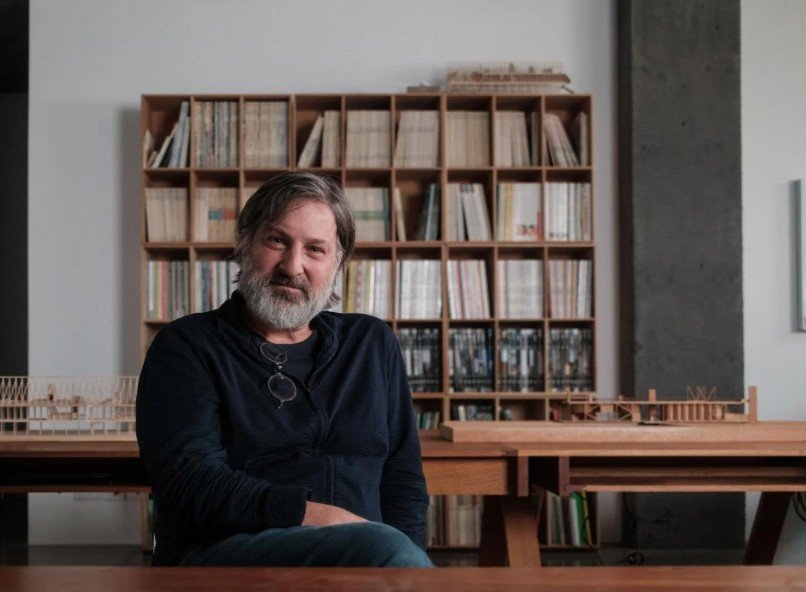
Who Is Smiljan Radić?
Smiljan Radić has long operated outside the architectural mainstream. Based in Chile, his work draws from:
- Remote landscapes rather than dense urban centers
- Craft traditions rather than industrial repetition
- Narrative and mythology rather than pure formalism
Unlike many Pritzker laureates whose influence is tied to global corporate practice, Radić has cultivated a deliberately independent trajectory, often working on projects that blur the boundary between architecture, sculpture, and environment.
Key characteristic: His buildings often feel discovered rather than designed.
Architecture as Landscape Extension
A consistent theme across all three source articles is Radić’s integration with landscape—not as a visual gesture, but as a conceptual foundation.
Core Strategies
- Topographic Sensitivity
Buildings respond to terrain rather than impose upon it. - Low Visual Dominance
Many projects appear partially embedded, hovering, or dissolving into their surroundings. - Atmospheric Experience
Emphasis on light, shadow, and weathering over time.
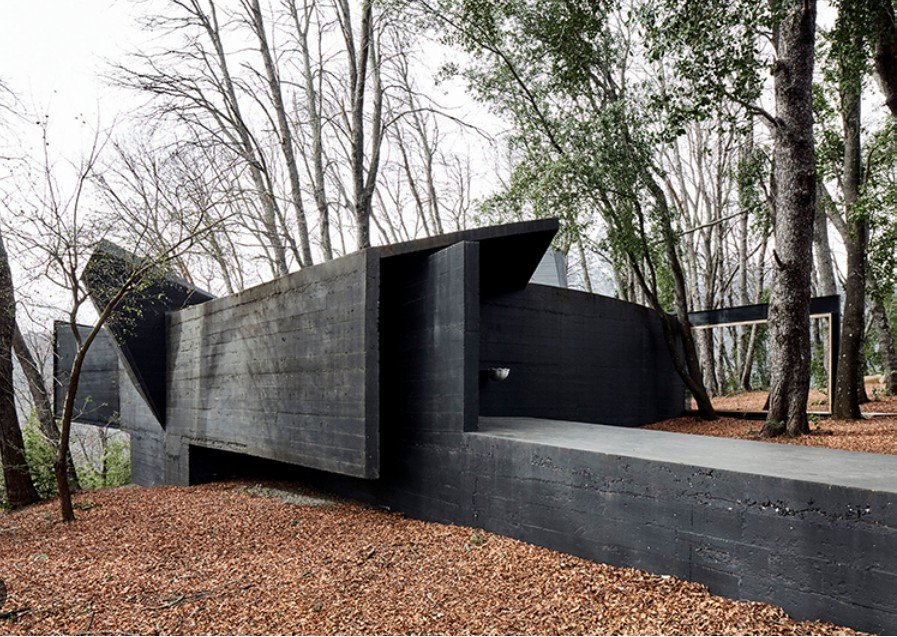
Notable Example: Casa para el Poema del Ángulo Recto
This project exemplifies Radić’s ability to merge poetic narrative with physical form—where architecture becomes a device for perception, not just shelter.
Matter as Narrative: The Material Language
Radić’s material palette is deceptively simple:
- Raw concrete
- Stone
- Timber
- Translucent membranes
Yet the way these materials are assembled produces a sense of ambiguity and tension.
Key Insight
Rather than pursuing precision as an aesthetic goal, Radić often embraces:
- Rough edges
- Imperfections
- Apparent fragility
This approach aligns with a broader shift in building science toward material honesty and lifecycle awareness, though Radić’s work is less about performance metrics and more about experiential depth.
In Passive House terms, we might say his work prioritizes sensory comfort over quantified efficiency—though the two need not be mutually exclusive.
Between Permanence and Ephemerality
One of the most compelling ideas highlighted across the articles is Radić’s exploration of temporal ambiguity.
His buildings often appear:
- Temporary, even when permanent
- Lightweight, even when massive
- Ancient, yet distinctly contemporary
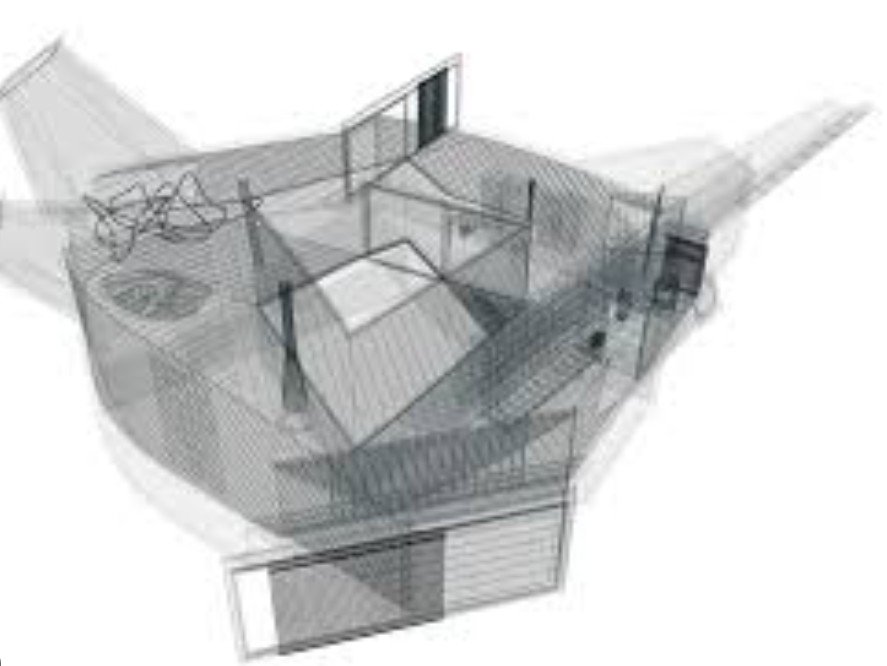
The Serpentine Pavilion (2014)
This internationally recognized project brought Radić global attention. A semi-translucent shell resting on rough stones, it evoked:
- A prehistoric artifact
- A futuristic installation
- A fragile object in tension with gravity
This duality—weight vs. lightness, permanence vs. impermanence—has become central to his architectural identity.
Resisting Classification in a Globalized Profession
A recurring theme in the media coverage is Radić’s resistance to stylistic labeling.
In a profession often driven by branding and signature aesthetics, his work stands apart because it:
- Avoids repetition
- Adapts to each site uniquely
- Draws from literature, art, and folklore
Why This Matters
From an economic and cultural standpoint, this signals a shift:
- Away from global homogenization
- Toward regional specificity and intellectual depth
For younger architects, this is a powerful reminder that relevance does not require conformity.
Lessons for Practice: What Architects Can Take Away
Radić’s Pritzker recognition offers several practical insights:
1. Context Is More Than Climate
Site analysis should include:
- Cultural narratives
- Material histories
- Emotional resonance
2. Material Choice Is Conceptual
Materials are not just technical decisions—they carry meaning.
3. Ambiguity Has Value
Not every building needs to resolve into a clear formal statement. Complexity can invite engagement.
4. Small-Scale Work Matters
Radić demonstrates that influence does not depend on mega-projects.
A Prize for a Different Future
The 2026 Pritzker Prize does not celebrate excess, scale, or technological spectacle. Instead, it honors an architect who works in the margins—geographically, conceptually, and materially.
Smiljan Radić reminds us that architecture can still be:
- Mysterious without being obscure
- Simple without being reductive
- Contextual without being nostalgic
In a time when the building industry faces both climate urgency and cultural fatigue, his work offers a quiet but profound proposition:
That architecture’s future may lie not in doing more—but in seeing more carefully, building more thoughtfully, and imagining more freely.