 Spotify
 iVoox
iVoox Amazon
Vectorworks Acquires Morpholio: What It Actually Means for Architects and Designers
The announcement that Vectorworks acquires Morpholio has been widely reported across architecture and engineering platforms. However, most coverage remains focused on the corporate narrative—what the acquisition is, who is involved, and where the companies are positioned in the market.
What is largely missing is a clear explanation of what this actually changes for architects, designers, and daily workflows.
This acquisition is not just about expanding a software portfolio. It represents a strategic move toward integrating conceptual design and production environments—something the industry has struggled with for decades.
Bridging the Gap Between Conceptual Design and BIM
One of the most persistent inefficiencies in architectural practice is the disconnect between early-stage design thinking and technical development.
Conceptual work typically happens in fluid, fast, and often informal environments—sketches, overlays, iterative exploration. Production work, by contrast, requires structured, precise, and data-driven tools.
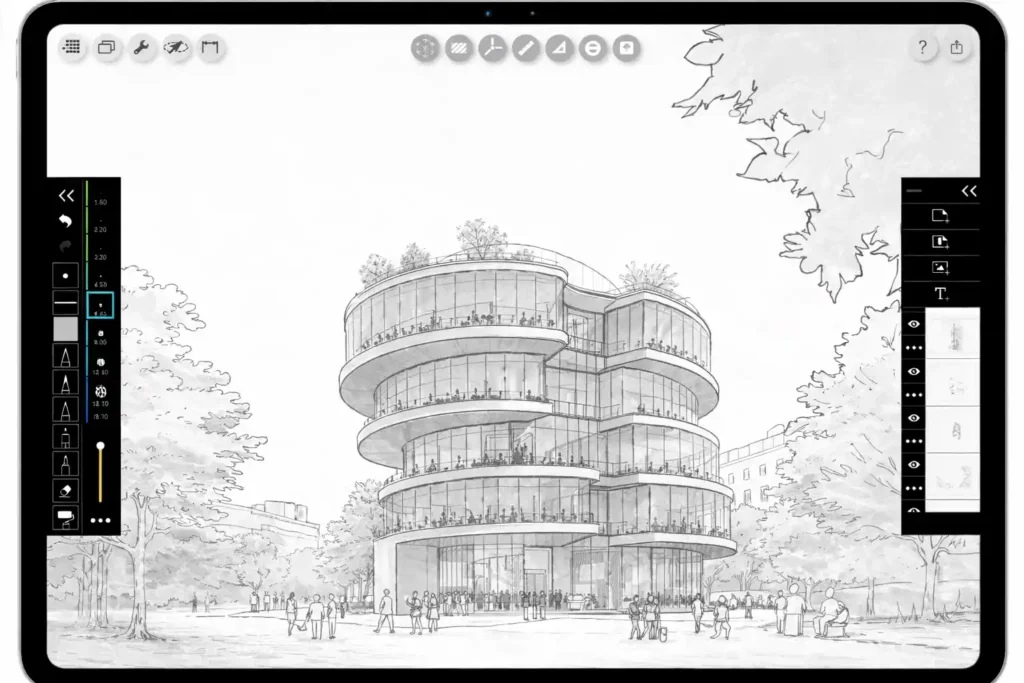
Morpholio has established itself as a leader in the conceptual phase, particularly through tools like Trace, which allow architects to think visually, iterate quickly, and communicate ideas without friction.
Vectorworks operates further downstream, supporting detailed modeling, documentation, and BIM workflows.
The acquisition directly addresses the gap between these two phases.
Instead of moving from one toolset to another—and often rebuilding work from scratch—there is now a clear path toward a more continuous workflow. The practical implication is not just convenience, but a measurable reduction in duplicated effort and lost information between stages.
Reducing Workflow Friction and Rework
In practice, one of the most time-consuming aspects of architectural work is not design itself, but translation.
Ideas developed during early stages are frequently redrawn, reinterpreted, or simplified when transferred into BIM environments. This process introduces inefficiencies and, in many cases, compromises the original design intent.
By bringing Morpholio into the Vectorworks ecosystem, the intention is to reduce this translation step.
The advantage is twofold:
- Early design decisions can carry forward with greater fidelity
- Teams spend less time reconstructing work that already exists in another format
From a practical standpoint, this has direct implications for project timelines, particularly in fast-paced environments where iteration speed is critical.
Strengthening Mobile and On-Site Design Capabilities
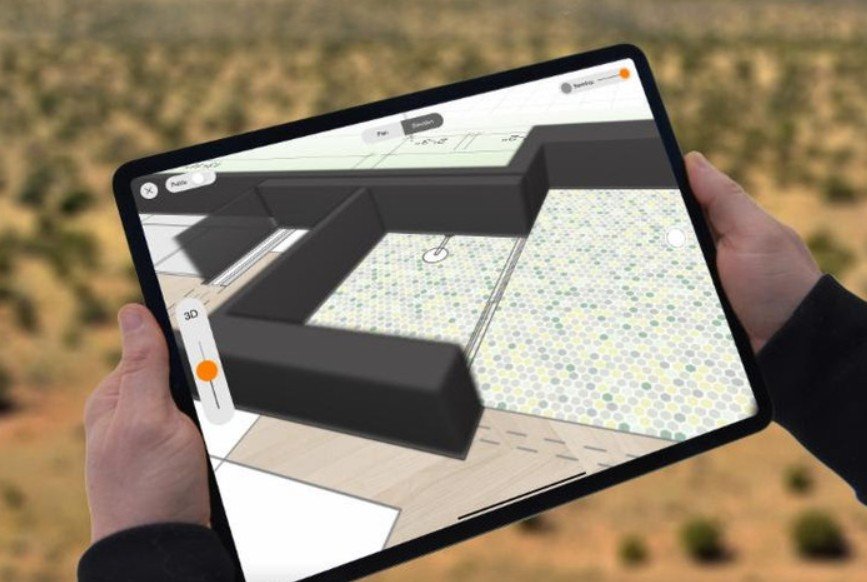
Another significant aspect of Morpholio’s value lies in its mobile-first approach. Many of its tools are designed for tablets, enabling architects to sketch, annotate, and develop ideas in real time, often directly on-site.
Vectorworks, traditionally centered around desktop-based workflows, gains immediate access to this capability through the acquisition.
This creates new possibilities for:
- Real-time design iteration during site visits
- Improved communication between field and office
- Faster feedback loops between stakeholders
In practical terms, this reduces the lag between observation, decision-making, and implementation—an area where many projects lose efficiency.
Enhancing Client Communication and Visual Clarity
Morpholio tools are widely used not only for design, but also for presentation. Their strength lies in producing clear, visually compelling outputs that are easy for non-technical stakeholders to understand.
Integrating this capability into Vectorworks introduces a more cohesive communication workflow.
Rather than exporting, adapting, or recreating visuals for presentations, architects can move more seamlessly from concept to communication.
This improves:
- Client understanding of design intent
- Speed of approvals and feedback
- Overall clarity in project discussions
In practice, clearer communication often translates directly into fewer revisions and more efficient decision-making.
Expanding the Design Ecosystem Rather Than Replacing It
It is important to note that this acquisition does not suggest a replacement of existing workflows, but rather an expansion.
Architects are unlikely to abandon established tools overnight. However, what this move does is create a stronger ecosystem where different phases of design are better connected.
The strategic value lies in integration, not substitution.
This aligns with a broader trend in the industry: reducing fragmentation between tools and creating more unified design environments.
Implications for the Future of Architectural Software
From a broader perspective, the acquisition reflects a shift in how software is evolving within the architecture industry.
Traditionally, tools have been segmented:
- Conceptual design tools
- Technical modeling platforms
- Presentation and visualization software
What this move signals is a gradual convergence of these categories.
Vectorworks is positioning itself not just as a BIM tool, but as a platform that supports the entire design lifecycle—from first sketch to final documentation.
For practitioners, this suggests a future where:
- Fewer tools are required to manage a project
- Transitions between design phases are less disruptive
- Creative intent is preserved more effectively throughout development
What This Means in Practice
For architects and designers, the real advantages of this acquisition can be summarized in practical terms:
- Less time spent translating ideas between tools
- Faster iteration during early design stages
- Improved continuity between concept and execution
- Stronger communication with clients and collaborators
- Greater flexibility through mobile design capabilities
These are not abstract benefits. They directly impact how efficiently projects move forward and how accurately design intent is maintained.
The fact that Vectorworks acquires Morpholio is not just another industry headline. It represents a targeted effort to solve a long-standing problem in architectural workflows—the disconnect between thinking and building.
While the full integration will take time to develop, the direction is clear.
This is about reducing friction, preserving design intent, and creating a more continuous and efficient workflow from concept to completion.
For professionals in the field, that is where the real value lies.
Author: Manfred Bauer