 Spotify
 iVoox
iVoox Amazon
Why IAQ Optimization Has Become Critical
Indoor air quality is no longer something homeowners can afford to ignore. As houses have become tighter and more energy efficient, they have also become better at holding pollutants indoors. That has changed the job of HVAC systems in a big way.
What used to be seen mainly as heating and cooling equipment now has to manage fresh air, moisture, filtration, and airflow patterns throughout the house.
In real homes, this shows up quickly. I’ve seen houses that perform beautifully on paper—good insulation, low energy use, solid equipment—but still feel unpleasant inside. The air feels stale, humidity lingers, and comfort is never quite right. More often than not, the problem is not the equipment itself. It is the lack of a proper IAQ strategy.
What IAQ Optimization Really Means in HVAC
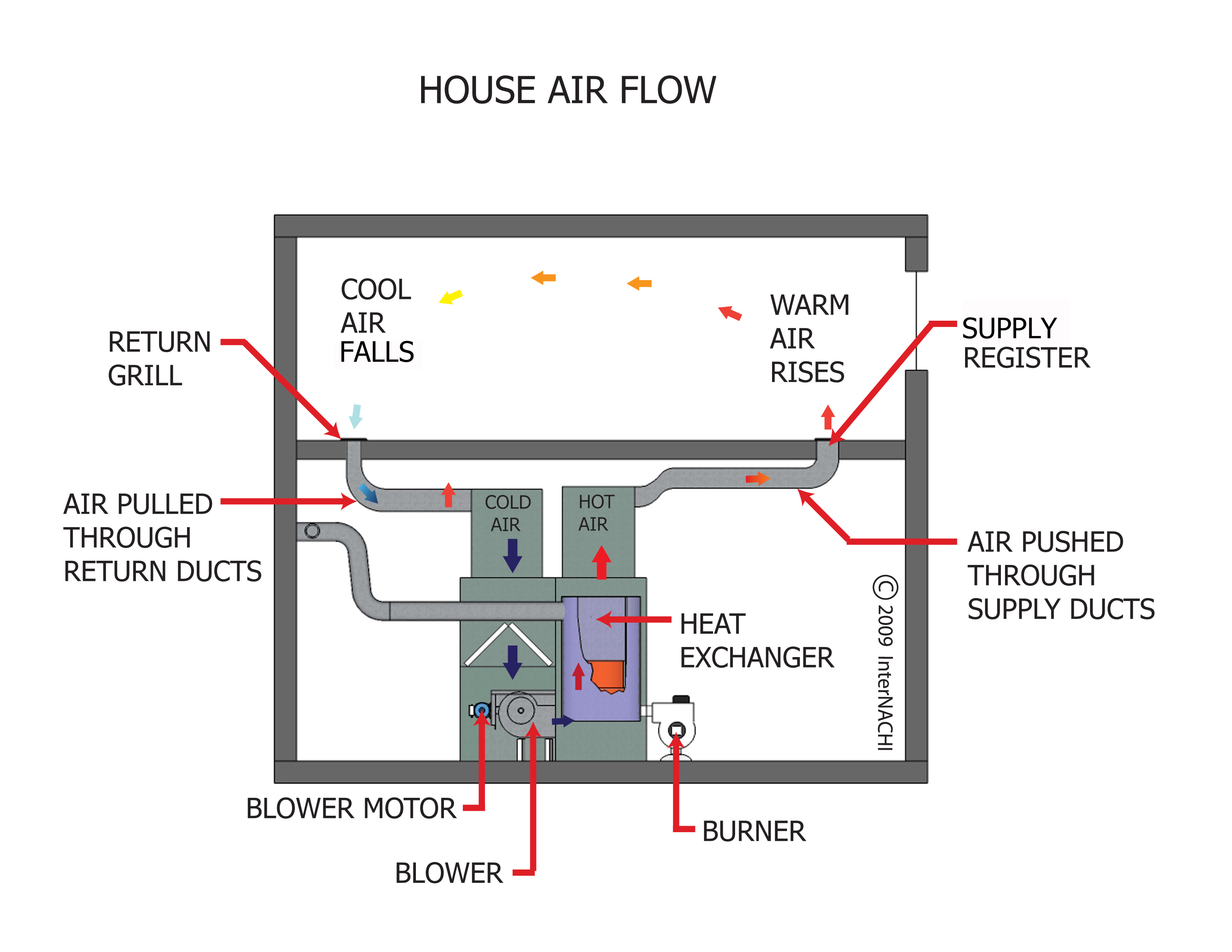
IAQ optimization is really about managing how air behaves inside a house. It is not just about moving more air. It is about where that air comes from, how it is filtered, how moisture is controlled, and whether the air actually reaches the rooms where people spend time.
A well-tuned system does several things at once. It replaces stale indoor air, filters out contaminants, helps control humidity, and avoids the dead zones where air tends to sit and get worse over time.
A lot of people assume the solution is simply more airflow. It usually is not. What matters is balanced, controlled airflow that works with the house instead of just blasting air through it.
The Real Problem With Modern Homes
The irony is that the better we build houses, the easier it becomes to get indoor air quality wrong.
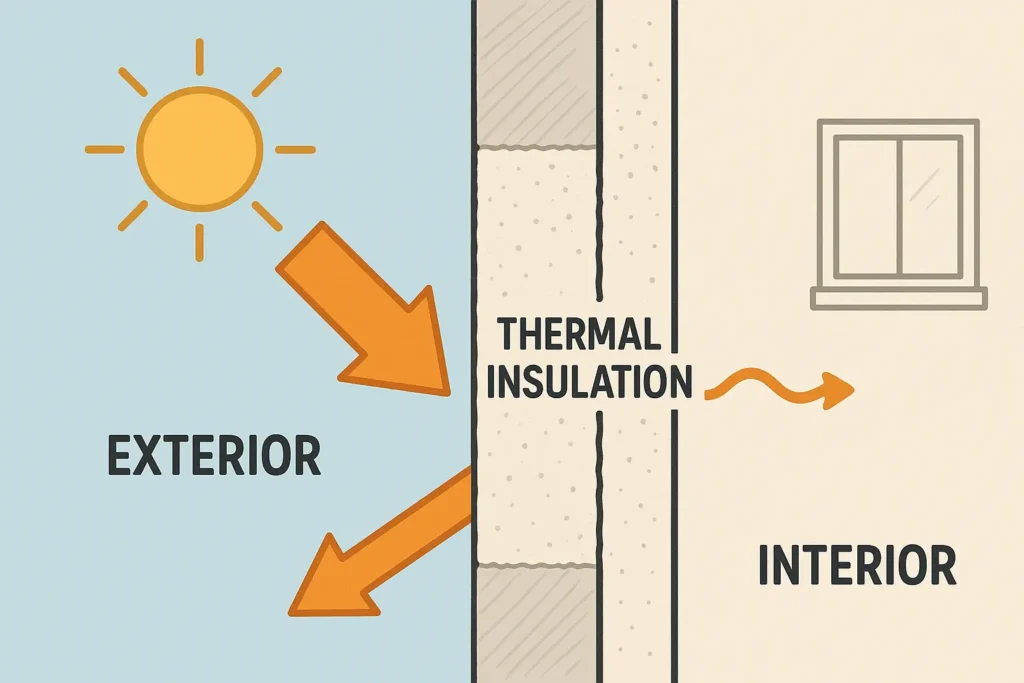
Tighter construction is excellent for energy performance because it cuts down on uncontrolled leakage. But older homes often relied on that accidental leakage for a basic level of air exchange. Once that disappears, any weakness in the ventilation strategy becomes much more obvious.
You start to see the same issues over and over again: bedrooms with elevated CO₂ overnight, bathrooms that stay damp too long, and living spaces that feel stuffy even though the system is running.
That is the point where IAQ stops being an abstract concept and turns into a day-to-day comfort problem.
Ventilation: Where Everything Starts
If there is one thing that consistently separates good indoor air from bad indoor air, it is ventilation.
Not random ventilation. Not occasional ventilation. Controlled ventilation.
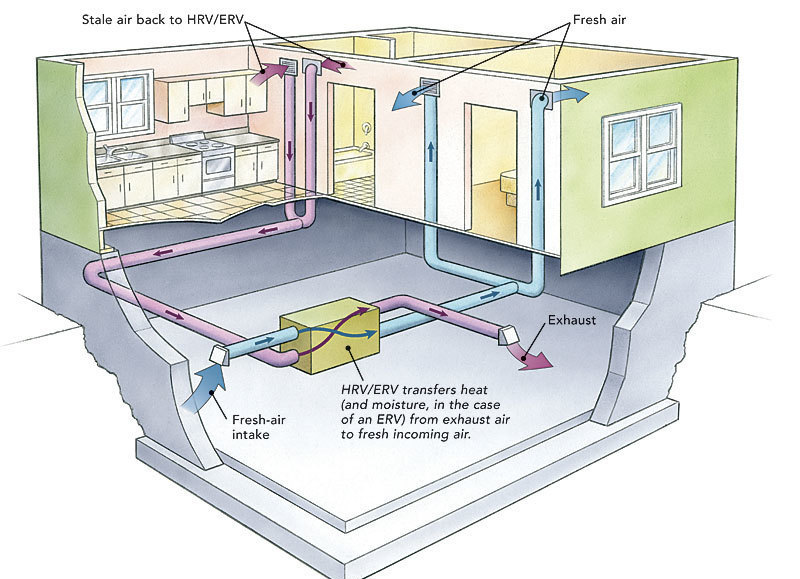
In a well-performing home, fresh air is brought in intentionally and stale air is exhausted intentionally. HRVs and ERVs do this well because they allow fresh air into the house without throwing energy performance away. Kitchens and bathrooms should also remove pollutants and moisture where they are actually produced.
What tends not to work is relying on windows, random leakage, or hoping the house somehow “breathes” on its own. That is not a strategy. It is just inconsistency dressed up as simplicity.
Filtration: Necessary, but Often Misunderstood
Filtration gets a lot of attention, but it is often treated too simplistically.
Yes, upgrading to a better filter such as MERV 13 can help. But that only matters if the system can handle it and if the installation is done properly. A better filter is not automatically a better result.
I’ve seen systems with high-quality filters still perform poorly because air leaks around the filter rack or because the fan is not designed to handle the added pressure drop.
Filtration works when it is part of the whole HVAC strategy. On its own, it is not a magic fix.
Airflow: The Part Most People Never Check
This is where a lot of IAQ plans quietly fall apart.
Everything may look fine in theory, but once you pay attention to the way the house actually behaves, the problems start showing up. Some rooms are over-supplied, others barely get enough air, and some spaces never circulate well at all. Doors affect pressure, returns are undersized, and duct leakage throws the whole balance off.
The result is not just uneven temperature. It is uneven air quality from one room to another.
In real projects, airflow correction often makes a bigger difference than people expect. Balancing ducts, improving return paths, and correcting distribution problems can do more for comfort and air quality than replacing expensive equipment.
Humidity: The Hidden Driver of Comfort and Air Quality
When a house feels wrong even though the thermostat says everything is fine, humidity is often the missing piece.
Too much moisture creates a heavy, uncomfortable feeling and increases the risk of odors, mold, and condensation problems. Too little moisture causes dryness, irritation, and a different kind of discomfort.
A surprising number of IAQ complaints are really humidity complaints in disguise.
Good HVAC design has to deal with that directly. The best systems do not just heat and cool. They also manage moisture through ventilation, dehumidification, and controls that respond to what is actually happening indoors.
The Latest Updates in IAQ Optimization (What’s Actually Changing)
The biggest change in IAQ right now is not a single new piece of equipment. It is the shift toward systems that respond to conditions instead of running blindly.
That is a major difference. Older setups tend to operate on fixed assumptions. Newer systems can react to what is going on inside the house in real time.
CO₂, particulate levels, humidity, and occupancy can now influence how the system behaves. Demand-controlled ventilation is a good example. Instead of bringing in the same amount of outdoor air all the time, it adjusts based on actual need.
That is where the industry is heading: systems that are more aware, more responsive, and less wasteful.
Does IAQ Optimization Actually Work?
Yes, but only when it is approached as a complete system rather than a list of separate upgrades.
When ventilation, filtration, airflow, and humidity control are all working together, the difference is obvious. The air feels fresher. Rooms are more consistent. Moisture issues calm down. People stop fiddling with the thermostat trying to solve a problem that was never really about temperature.
When one part is missing, though, the whole system tends to underperform.
That is why so many homeowners spend serious money and still feel disappointed. They focus on equipment first, when the real issue is often how the house, the ductwork, the controls, and the ventilation strategy interact.
How to Approach IAQ Optimization in a Real Home
The best approach is usually straightforward, but it does require looking at the house as a whole.
Start with behavior, not product lists. Which rooms feel stale? Where does humidity build up? Are there spaces that always feel uncomfortable no matter what the thermostat says? Those clues tell you a lot.
From there, the right improvements become easier to identify. Maybe the house needs better ventilation in key areas. Maybe the filtration is fine in theory but poorly installed. Maybe the airflow simply needs balancing. In some homes, even basic monitoring helps confirm what people are already feeling.
The important thing is not doing everything at once. It is making sure each change supports the others instead of creating a new imbalance.
The homes with the best indoor air quality are not necessarily the ones with the most expensive equipment. They are the ones where air is managed deliberately.
IAQ optimization is not about adding gadgets or chasing specs. It is about getting ventilation, filtration, airflow, and control to work together in a way that actually suits the house.
When that happens, people notice it right away. The house feels better, and it is not subtle.
Author: Julian R. Vance