 Spotify
 iVoox
iVoox Amazon
The Evolution from 2021 to 2024: Refining the Foundations of Residential Design
The transition from the 2021 to the 2024 International Residential Code (IRC) is evolutionary rather than revolutionary—but deeply consequential. The new edition consolidates a decade of practice into clearer pathways for structural reliability, enclosure performance, and safer system integration. Language is refined, references updated, and long-standing ambiguities resolved. For architects, builders, and inspectors, these are not new burdens but sharper expectations: improved engineering alignment, precise moisture and air control, and a more complete vision of residential resilience.
Structural Synchronization: ASCE 7-22 and a Unified Approach to Loads
One of the most visible 2024 IRC updates is its synchronization with ASCE 7-22, reshaping how designers and builders address structural loads. Updated wind speed maps and component-and-cladding pressures ripple through roof sheathing fastening, uplift anchorage, and wall-bracing checks, especially in wind-prone regions. Wall-bracing provisions are recalibrated rather than reinvented, now better aligned with ASCE 7’s methodology. Coordination in snow, seismic, and drift design is also clarified, closing the gaps that once forced local interpretation.
Flood Resilience: Coordination with ASCE 24-22
Flood-hazard design takes a decisive step forward in the 2024 IRC through direct alignment with ASCE 24-22. The new code clarifies equipment elevation, enclosure limitations, and breakaway wall detailing for coastal zones. Foundation types for coastal A and V zones are distinguished with greater precision, tying more explicitly to scour and erosion assumptions. For inspectors, this simplifies flood-elevation verification and documentation. For designers, it underscores the importance of early site assessments, as the prescriptive path now offers less flexibility once the wrong foundation strategy is chosen.
Energy and Enclosure Alignment: Durability First, Efficiency Second
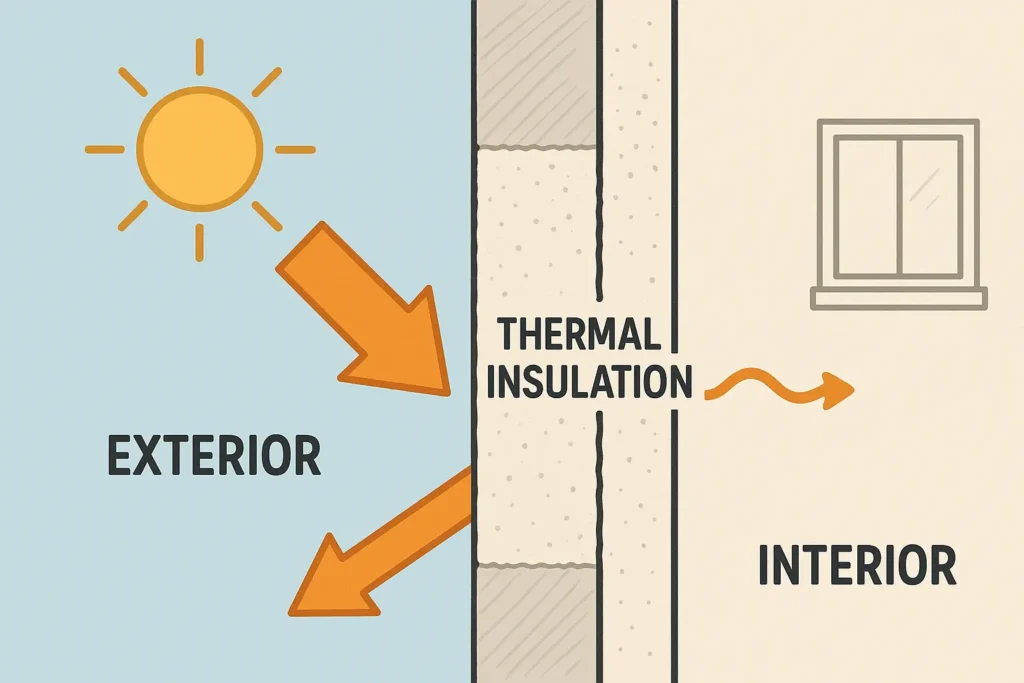
The 2024 IRC strengthens its bond with the 2024 International Energy Conservation Code (IECC), ensuring that energy and moisture control work as a single system. The IRC continues to offer a prescriptive energy path, but jurisdictions increasingly steer projects through the IECC’s residential provisions. Air-sealing targets, duct integrity, and fenestration performance now coordinate with climate-specific moisture control requirements. Condensation control in roof assemblies links directly to thermal performance, closing the gap between insulation, ventilation, and vapor management. The result: durability through energy efficiency.
Mechanical and Electrical Integration: Modern Systems, Clearer Rules
Mechanical and electrical provisions evolve to reflect a decade of new residential technologies. The 2024 IRC refines whole-house mechanical ventilation guidance, improving airflow and distribution verification in tighter, smaller homes. Integration with rooftop solar systems now features more coherent cross-references, ensuring that roof setbacks, pathways, and anchorage align with fire-code access provisions.
Perhaps most notably, Residential Energy Storage Systems (ESS) receive a more mature treatment. The 2024 IRC integrates UL 9540/9540A standards and harmonizes with IFC-residential provisions, reducing the conflicts that plagued 2021-era plan reviews. The result is a consistent, enforceable framework for safe battery-storage integration.
Fire Protection and Life Safety: Clarity Over Complexity
Fire protection in attached dwellings remains steady but sharper. The 2024 IRC enhances continuity requirements for separating walls at roof and attic intersections, eliminating weak points in fire-resistive construction. The townhouse sprinkler trigger continues under the latest NFPA 13D standard, bringing updates to component listings and system compatibility. For inspectors and designers, this means more predictable product approvals and fewer local addenda.
Material Standards and Systemic Thinking
Material provisions across the 2024 IRC reflect incremental yet meaningful improvements. References to engineered wood products (LVL, I-joists, CLT) are updated to match current design values. Foam-plastic insulation rules now better integrate ignition and thermal-barrier testing, while roof and attic provisions synchronize with energy and moisture chapters. The 2024 framework treats the enclosure as a system, recognizing that air, water, and thermal-control layers must perform in concert.
Design and Inspection Practice: Two Strategic Shifts
The new code invites two strategic adjustments in professional practice:
Start every project with a precise hazard profile. Map wind speeds, flood elevations, and seismic categories early to define an efficient structural strategy under ASCE 7-22 and ASCE 24-22.
Select an energy path early. Let the IECC or IRC energy provisions guide enclosure detailing, ensuring that thermal and moisture performance work in harmony rather than conflict.
Inspection practice also modernizes. The 2024 IRC acknowledges digital submittals and limited remote inspections, improving efficiency without sacrificing rigor. Verification of wind-related fastening, uplift anchorage, and flood elevations now aligns seamlessly with design documentation. Safe rooms and storm shelters reference ICC 500-2020, providing a unified evaluation standard.
Practical Implications for Builders and Trades
Builders will notice practical, field-level changes. Expect greater scrutiny of air, water, and thermal-layer continuity at penetrations and transitions, as these are now primary durability features. ESS siting and separation will be inspected early and often, and sprinkler submittals under NFPA 13D must match the latest edition. The emphasis is on coordination and documentation—not new burdens, but refined expectations.
Toward a More Resilient Housing Future
Viewed through the lens of sustainability and risk, the 2021–2024 evolution of the IRC is a firm step toward resilient housing. By aligning with ASCE 7-22, ASCE 24-22, and the IECC 2024, the code harmonizes structural safety, moisture durability, and energy performance. This minimizes repair cycles, extends service life, and positions energy efficiency as a natural by-product of durability.
The 2024 IRC does not mandate virtue; it raises the floor. It ensures that durable, efficient, and resilient construction becomes the default—a shared commitment to safety, sustainability, and smarter building.