 Spotify
 iVoox
iVoox Amazon
How Innovation Shaped a Global Architectural Movement
Art Deco is one of the most recognizable design styles of the 20th century. Born in the early 1900s and formally introduced at the 1925 Exposition Internationale des Arts Décoratifs et Industriels Modernes in Paris, it represented a bold departure from ornate historicism. Defined by geometric patterns, bold colors, and a fascination with modernity, the origins of Art Deco design were deeply rooted in both artistic experimentation and technological innovation. More than just a style, it introduced new construction techniques and materials that would inspire architects, influence buildings, and shape urban landscapes across the world.
Precursors & Early Influences
The birth of Art Deco design cannot be separated from the movements that preceded it. Art Nouveau’s flowing curves, the Vienna Secession’s abstract geometry, and Cubism’s fractured planes all contributed visual ideas that would merge into the Deco aesthetic.
Archaeological discoveries also played a major role. The excavation of King Tutankhamun’s tomb in 1922 introduced Egyptian motifs such as sunbursts and lotus forms, while Mesoamerican and African influences enriched the vocabulary of decorative geometry. These global references reflected the modern fascination with progress and the exotic, aligning perfectly with the optimism of the Machine Age.
Technological and Material Innovations That Enabled Art Deco
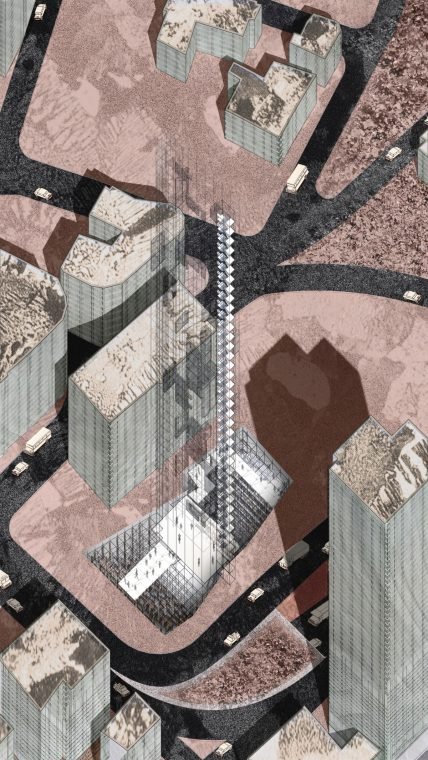
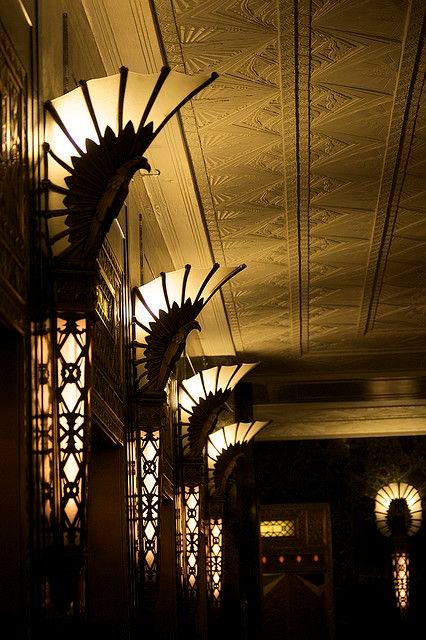
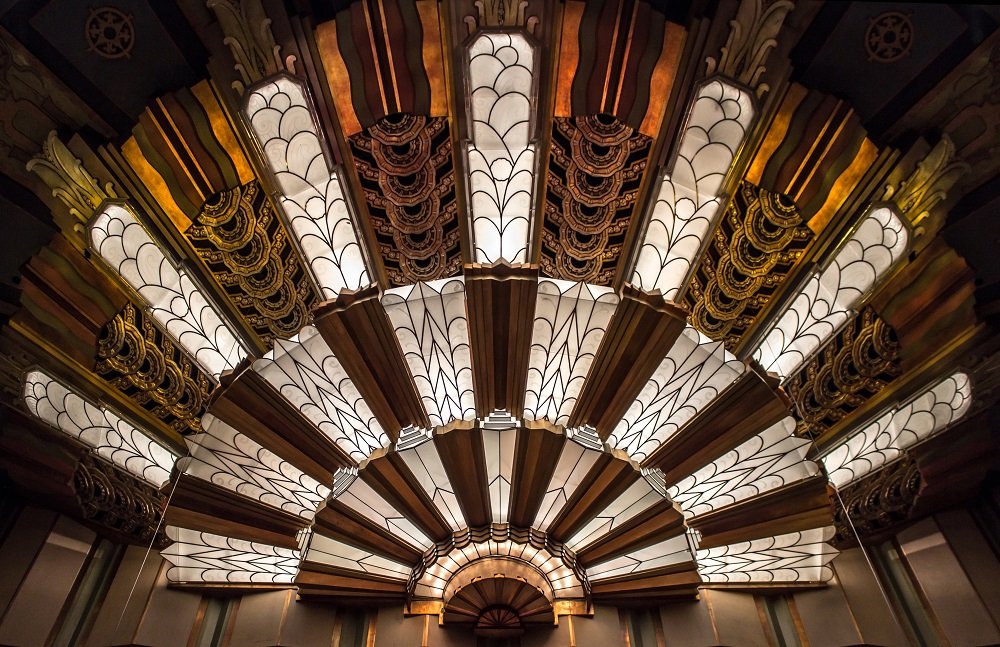
While Art Deco is remembered for its decorative flair, its origins in architecture were inseparable from advancements in construction and engineering. Reinforced concrete, steel framing, aluminium, chrome, and plate glass allowed architects to create buildings with striking verticality, bold ornamentation, and expansive windows.
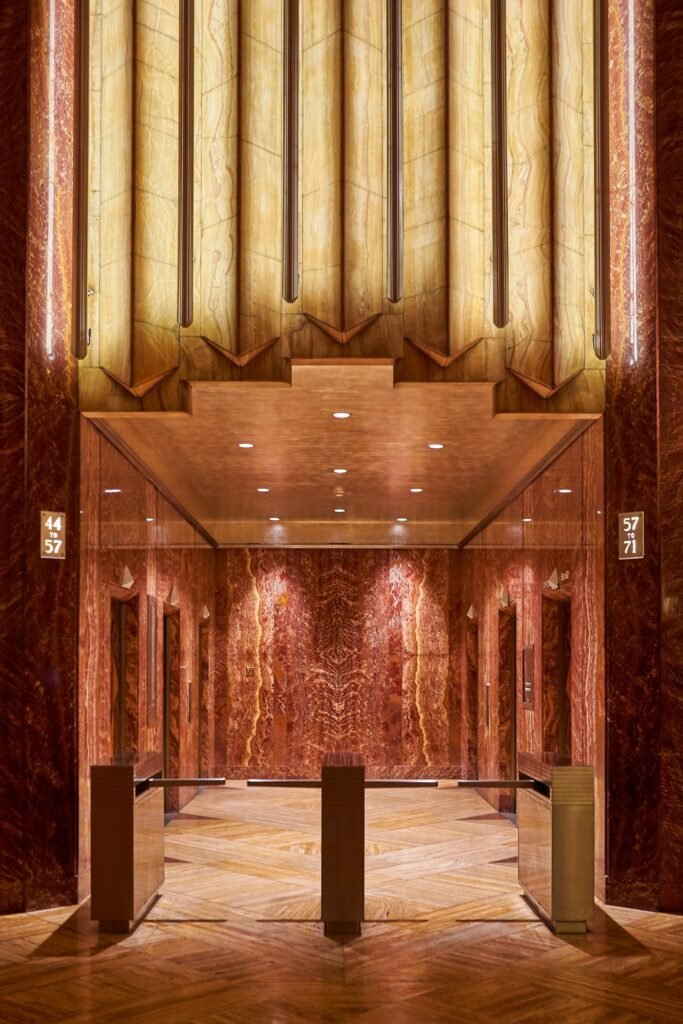
This embrace of industrial materials distinguished Art Deco from earlier decorative movements. It was a style of both luxury and modern practicality—uniting handcrafted detail with mass production. The Chrysler Building in New York, with its stainless‑steel spire and geometric façade, epitomized how new techniques created structures that were both futuristic and monumental. These innovations inspired architects far beyond France and the United States, showing how construction could embody modern identity.
The Paris 1925 Exhibition: Art Deco’s Defining Moment
The 1925 Exposition in Paris gave Art Deco its name and global platform. Designers, architects, and artists from around the world showcased objects and buildings that celebrated luxury, geometry, and modern craftsmanship. For many visitors, it was the first encounter with a design language that combined avant‑garde aesthetics with technical innovation. The fair helped spread Deco principles internationally, influencing both elite and mass‑market design. It marked the moment when Art Deco shifted from scattered influences into a recognizable and unified movement.
Iconic Architects and Pioneering Buildings
Architects like Auguste Perret and Henri Sauvage in France experimented with reinforced concrete, creating structures that balanced ornament with engineering precision. In the United States, William Van Alen’s Chrysler Building and Shreve, Lamb & Harmon’s Empire State Building became icons of vertical Art Deco ambition. These projects demonstrated how Art Deco architecture origins were rooted not just in decorative motifs but in structural innovations that defined skylines and inspired other architects to explore new possibilities.
Global Diffusion & Local Adaptations
One of the most fascinating aspects of Art Deco is how quickly it spread worldwide. In Mumbai, Deco buildings fused tropical functionality with streamlined curves, making the city home to one of the largest collections of Art Deco architecture outside Miami. In Mexico City and São Paulo, architects combined Deco motifs with local materials and climate‑responsive design. Across Africa and Asia, colonial and indigenous builders adapted Deco to local traditions, producing hybrid forms that showed the flexibility of the style.
These global examples illustrate how Art Deco was not just an export of French taste—it was a movement shaped by local needs, climates, and cultures. Its construction techniques, from reinforced concrete frames to decorative plaster, became a universal architectural language of modernity.
Art Deco’s Influence on Later Styles
The origins of Art Deco architecture also seeded future design movements. Streamline Moderne simplified Deco’s geometry into aerodynamic curves, while the International Style absorbed its emphasis on new materials and construction techniques, shedding ornament for functionalism. Even Brutalism and Postmodernism carried echoes of Deco’s bold experimentation with form and technology. By demonstrating that architecture could be both technologically advanced and stylistically modern, Art Deco paved the way for the 20th century’s most influential design philosophies.
Revival, Preservation, and Contemporary Echoes
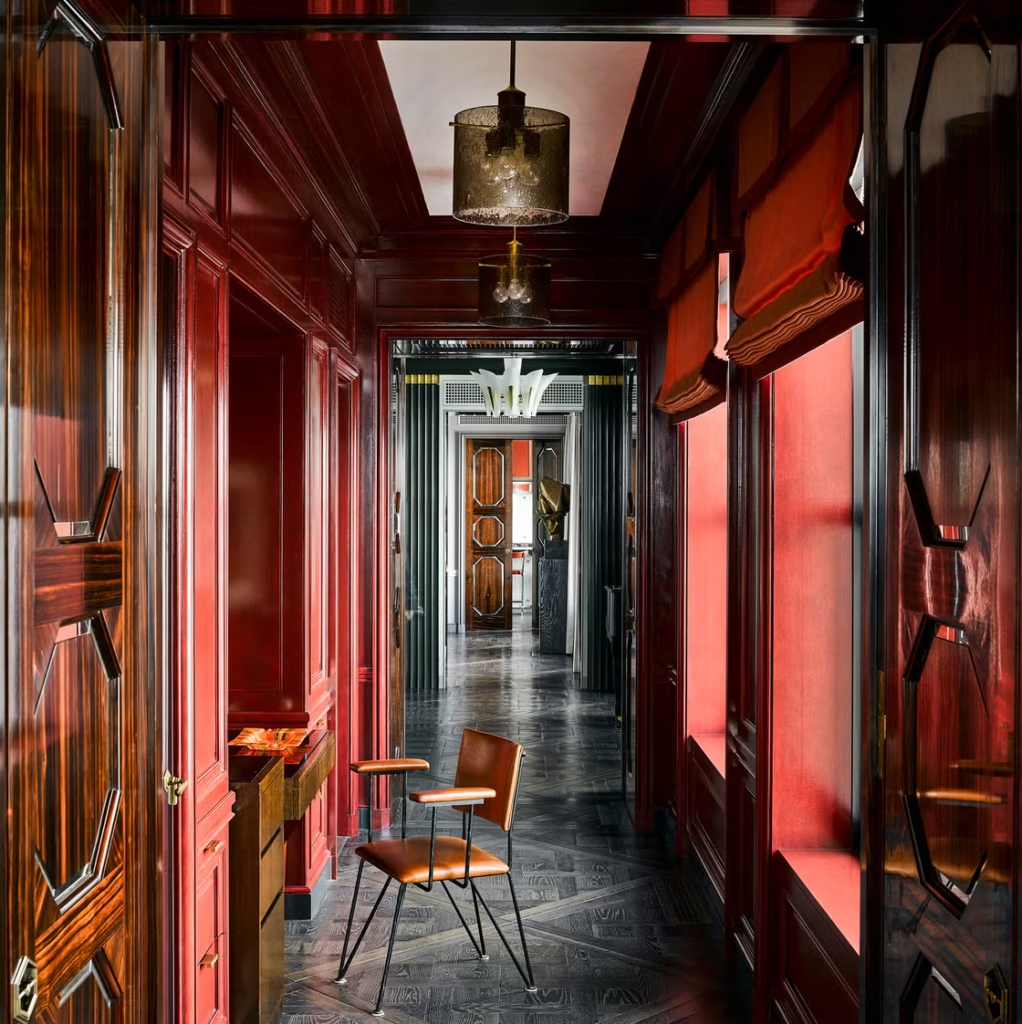
Today, there is renewed appreciation for Art Deco. Preservation efforts protect historic Deco districts in Miami, Havana, and Mumbai, while contemporary architects reinterpret Deco motifs with modern materials. Interiors often borrow its bold geometry and metallic finishes, proving the lasting appeal of the style. In many ways, this revival echoes the original spirit of Art Deco: a desire to merge artistry, technology, and cultural identity into built form.
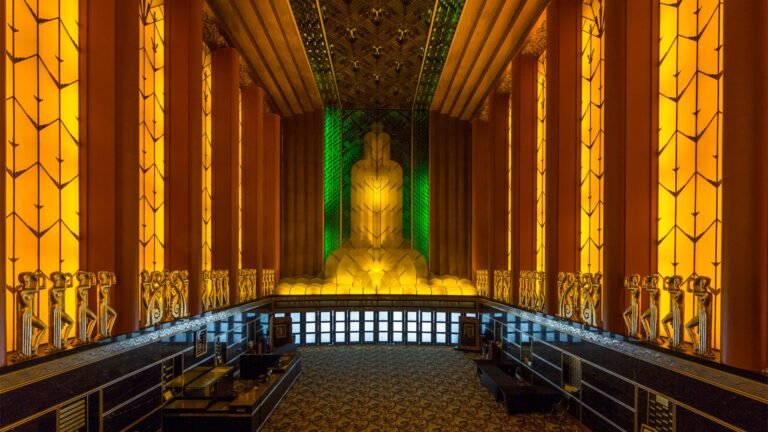
The origins of Art Deco design lie in a unique convergence of artistic movements, archaeological inspiration, and groundbreaking construction technologies. From Paris to Mumbai, from New York to São Paulo, Art Deco was never just a decorative style—it was an architectural language that symbolized progress, innovation, and modernity. Its techniques reshaped skylines, influenced generations of architects, and left a legacy that continues to inspire design and construction worldwide.
Frequently Asked Questions
What is the difference between Art Deco and Art Nouveau?
Art Nouveau emphasized organic curves and natural motifs, while Art Deco celebrated geometry, symmetry, and modern industrial materials.
What new materials were used in Art Deco architecture?
Reinforced concrete, aluminium, chrome, stainless steel, and plate glass were central to the style, enabling new structural forms.
In which countries is Art Deco most prominent outside France and the U.S.?
India, Brazil, Mexico, Cuba, and Australia all have major Art Deco collections, each adapted to local contexts.
How did Art Deco influence modern architecture?
Its use of new materials and construction methods paved the way for the Streamline Moderne and International Style, bridging ornament and functionalism.
Author: Riley Carter