 Spotify
 iVoox
iVoox Amazon
Xu Tiantian has become one of the most important voices in contemporary architecture because her work challenges a simple but powerful idea: a building should not exist only to look beautiful. When she said that “beauty in itself is dangerous,” she was not rejecting beauty. She was criticizing architecture that becomes only an image, only a spectacle, or only a monument disconnected from people and place.
Through DnA Design and Architecture, her Beijing-based studio, Xu Tiantian has developed a body of work rooted in rural revitalization, adaptive reuse, cultural memory, local economies, and community life. Her projects are not usually about creating massive icons. They are about transforming villages, factories, bamboo forests, quarries, workshops, and overlooked landscapes into meaningful public spaces.

Who Is Xu Tiantian?
Xu Tiantian is a Chinese architect and the founding principal of DnA Design and Architecture. She studied architecture at Tsinghua University in Beijing and later completed graduate studies at Harvard Graduate School of Design. Her work developed during a period when China was experiencing rapid urbanization, large-scale development, and dramatic changes in rural and urban life.
While many architects pursued large urban projects and iconic buildings, Xu Tiantian took a different direction. She focused on smaller, precise interventions that could help communities rediscover value in their own landscapes, crafts, buildings, and traditions.
Why “Beauty Is Dangerous” Became Such a Powerful Statement
The phrase “beauty is dangerous” became influential because it questions one of architecture’s biggest obsessions: appearance. In today’s media-driven culture, buildings are often judged by photographs before they are understood as places. Xu Tiantian’s work pushes against that tendency.
Her architecture suggests that beauty should not be the only objective. Beauty becomes meaningful when it grows from function, memory, material honesty, cultural identity, and social use. In her projects, beauty is not decoration. It is the result of understanding what a place needs.
Moving Beyond Starchitecture
Xu Tiantian’s architecture offers an alternative to starchitecture. Instead of designing buildings that dominate their surroundings, she creates architecture that listens to its surroundings. Her projects are often modest in scale but deep in impact.
This is why her work matters: she shows that architecture can transform communities without erasing them. A tofu factory, a brown sugar workshop, a bamboo theatre, or an abandoned quarry can become a cultural and economic catalyst when design is used carefully.


Xu Tiantian and Rural Revitalization
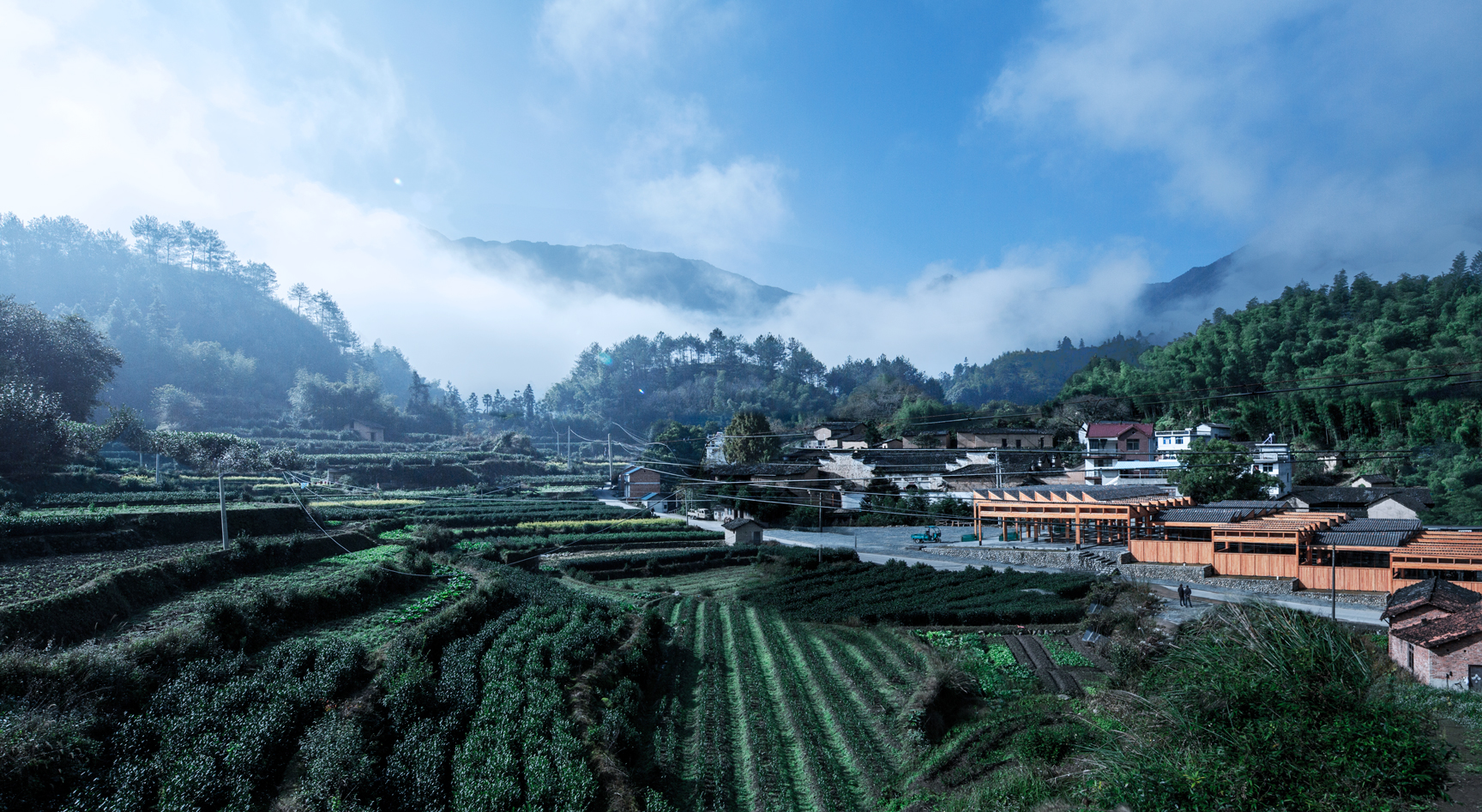
Much of Xu Tiantian’s international recognition comes from her rural revitalization work in Songyang County, Zhejiang Province. Instead of replacing villages with generic development, she works with what already exists: landscapes, local industries, vernacular construction, abandoned sites, and community memory.
This strategy is often described as architectural acupuncture. The idea is that small, carefully placed interventions can create wider social, cultural, and economic effects. A single building can reconnect a village with tourism, craft, production, public gathering, and identity.
Tofu Factory: Production as Architecture
The Tofu Factory is one of Xu Tiantian’s clearest examples of architecture connected to local economy. The project upgrades traditional tofu production while allowing visitors to understand the process. It is both a working factory and a cultural experience.
Instead of treating rural production as something hidden or outdated, the building makes it visible, organized, and valuable. This is one of the key lessons in Xu Tiantian’s work: architecture can strengthen local industries without turning them into empty tourist attractions.

Bamboo Theatre: Architecture That Grows
Bamboo Theatre is one of Xu Tiantian’s most poetic projects. Instead of constructing a conventional building, the project bends and organizes living bamboo to create a natural theatre and gathering space. It is architecture, landscape, performance space, and ecological gesture at the same time.
The project shows why Xu Tiantian’s work is so different from spectacle-driven architecture. It is visually powerful, but its power comes from restraint, local knowledge, and the use of what the place already offers.

Jinyun Quarries: Turning Industrial Scars Into Public Space
The Jinyun Quarries project is another major milestone in Xu Tiantian’s career. Abandoned stone quarries were transformed into cultural, social, and public spaces. Instead of covering the scars of extraction, the project reveals them and gives them a new role.
This is adaptive reuse at a territorial scale. The quarry is not treated as a problem to erase, but as a spatial memory that can become useful again. The result is architecture that feels dramatic without being artificial.

Architecture as Social Infrastructure
Xu Tiantian’s work is important because it treats architecture as social infrastructure. Her buildings do not only provide shelter or visual identity. They support economies, rituals, public life, tourism, cultural continuity, and collective memory.
Her projects often ask a different question from conventional architecture. Instead of asking, “What iconic form can we create?” they ask, “What does this place need in order to live better?”
Why Xu Tiantian Matters Today
Xu Tiantian matters because architecture today faces urgent questions about sustainability, cultural identity, rural decline, over-urbanization, and the role of beauty in public life. Her work does not answer these questions with slogans. It answers them through built projects that are careful, contextual, and socially useful.
Her architecture shows that small projects can have large consequences. A village workshop can become an economic engine. A bamboo forest can become a theatre. A quarry can become a public room. A rural building can become a way for a community to see itself differently.
Awards and Recognition
Xu Tiantian has received international recognition for her contribution to socially engaged architecture, including major awards and exhibitions focused on her rural revitalization work. This recognition reflects a wider shift in architecture: the profession is increasingly valuing buildings that improve communities rather than simply producing visual icons.
Xu Tiantian’s statement that “beauty is dangerous” is not a rejection of beauty. It is a warning against empty beauty. Her work proves that architecture can be beautiful because it is useful, because it belongs to a place, and because it helps people reconnect with their own culture and landscape.
For anyone discovering Xu Tiantian for the first time, the most important idea is simple: her architecture does not try to shout. It listens, repairs, reveals, and transforms. That is why her work has become so influential in contemporary architecture.